Briefing about the Lancelin
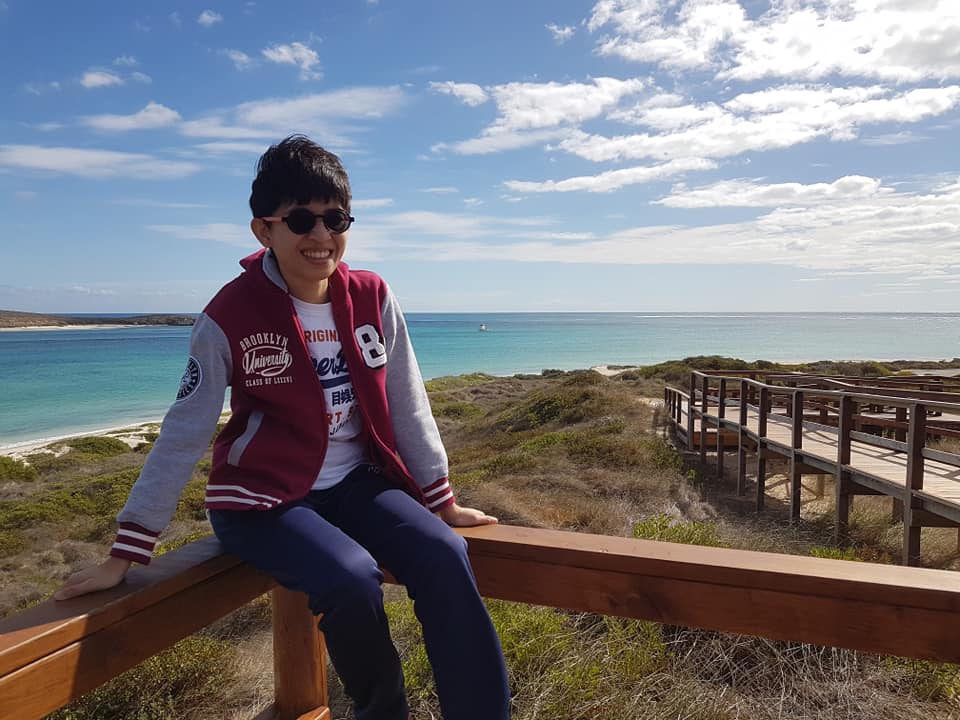
Lancelin is one of the top tourist attractions in Perth Australia which is worth to go for a visit. Lancelin is a small fishing and tourist town 127 km north of Perth, Western Australia. It is within the Shire of Gingin at the end of Wanneroo Road, and a few kilometres from the start of the Indian Ocean Drive. The best to go in Lancelin would be visit the Sand boarding, Lobster Shack as well as the Pinnacle.
Lancelin has become one of Australia’s premier sandboarding destinations. Featuring pure white sand dunes, over three stories high, with free entry, the Lancelin sand dunes are must on your Western Australian adventure. To hire for the Sandboard, it is cost $12.50 per person.
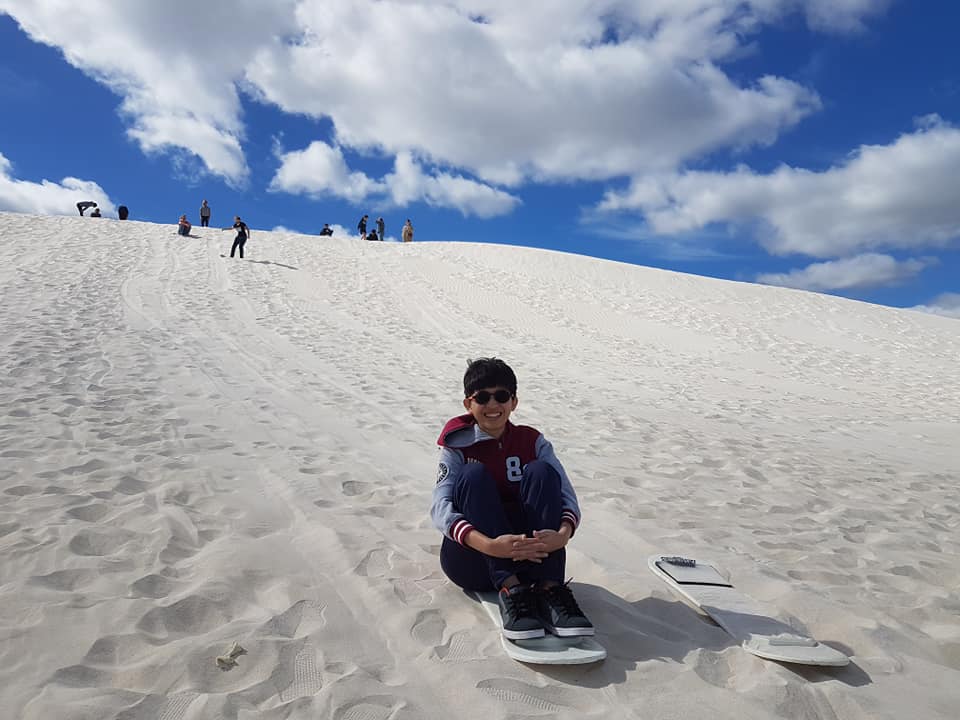
How do you get to Lancelin sand dunes?
The Lancelin Dunes are only 1.5 hours north of Perth and are an easy day trip. Renting a car and self-driving is definitely an option; park at the entrance to the dunes and walk or take your 4 wheel drive all the way to the main sandboarding hill. However, there is an another option which is book for a day tours just for approximately $169.
Some people asked me that is Sand Boarding dangerous? Well, if you’re going to go for sand boarding in Perth, you need to ensure that you have travel insurance. While we made it home safely from the road sand dunes Perth. It can be very dangerous, with accidents happening quite often. But Perth Australia should be fine, however, travel insurance still be a must to have just incase there is anything happen.
When would be the best season to go for sand boarding
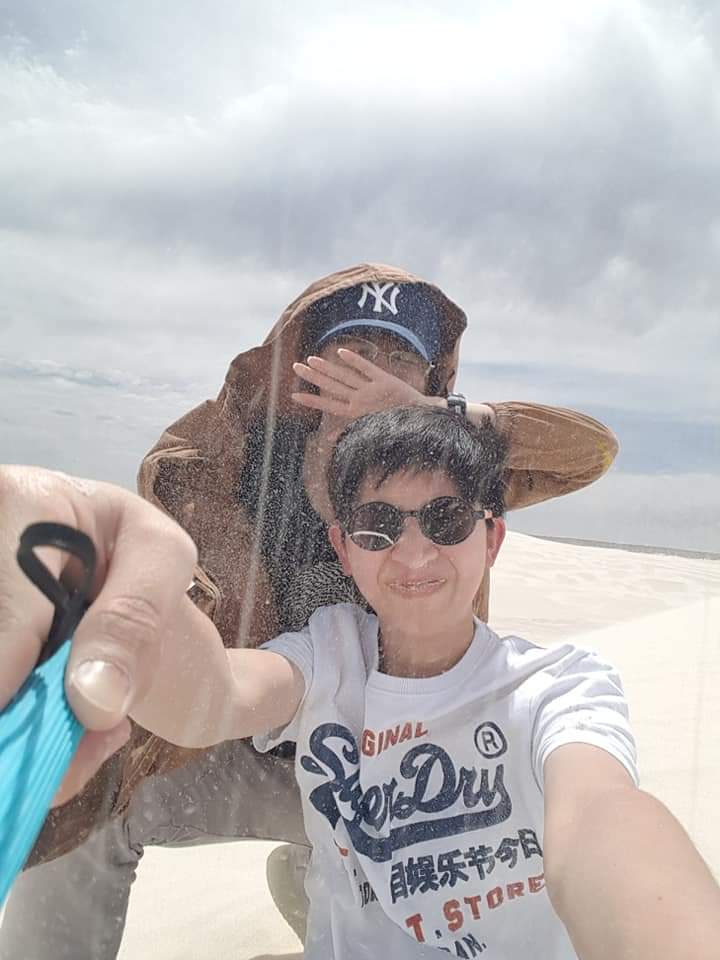
This is what will happening if you visit the wrong season 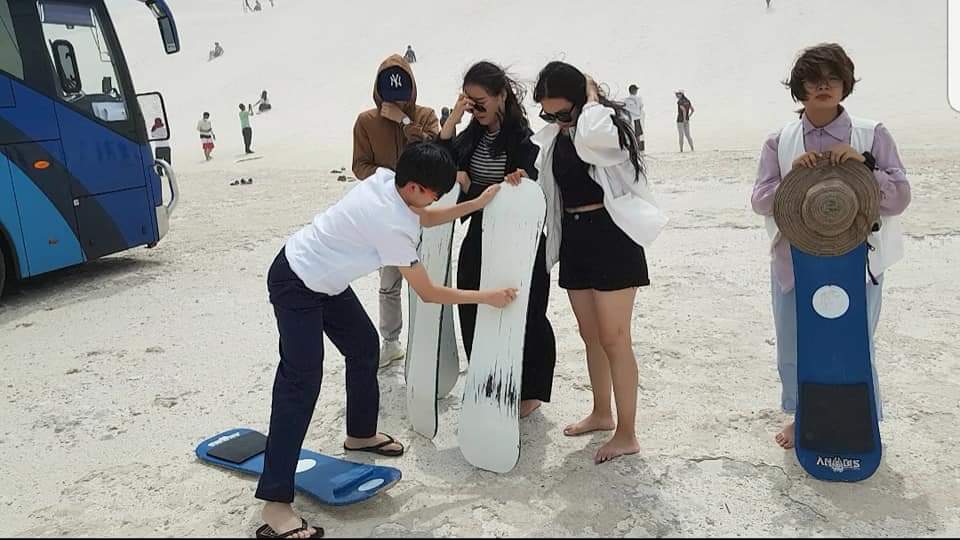
I was teaching my group students how to use it
In my personal experience, the best season to go for Sand Boarding would be Autumn and Winter which is between March and August. My first photos shown above is what will happened if you go during Spring and Summer season. The sand will flew into your mouth and eyes which is not comfortable at all so I don’t recommended to visit during the spring and summer season.
Nambung National Park (Pinnacles)

Nambung National Park is a national park in the Wheatbelt region of Western Australia, 200 km northwest of Perth, Australia and 17 km south of the small coastal town of Cervantes. The park contains the Pinnacles Desert which is an area with thousands of limestone formations called pinnacles.
Walk on the moonscape of the Pinnacles, feast on fresh lobster and surf giant sand dunes. Take a day trip from Perth to the other-worldly landscape of the Pinnacles Desert in Nambung National Park. Following the Indian Ocean Drive, stop to meet friendly kangaroos, try sand-boarding and taste Cervantes’ famous seafood delicacy.
If you’re travelling between July and October, you will see Western Australia in full colour, as the coastal landscapes are filled with the blooms of spring wildflowers.
Rising mysteriously from the dune sands are thousands of limestone pillars, up to four metres tall, a landscape in eerie contrast to the surrounding heath.
Some are jagged, sharp-edged columns, rising to a point; others resemble tombstones. What exactly are the pinnacles? What natural processes have created these odd and spectacular structures?
In places, the pinnacles reach up to 3.5m tall. Some are jagged, sharp-edged columns, rising to a point, while others resemble tombstones. Please treat the pinnacles with respect and never climb on these fragile structures.
Features that provide clues to the origin of the Pinnacles can be seen by the astute observer. For example, many pinnacles display cross-bedding structures, where the angle of deposition of the sand changes very abruptly. This indicates that the dunes from which the limestone bed was formed was originally laid down by the wind.
Some pinnacles have a mushroom-like shape, due to remnants of a calcrete capping. The mushroom shape has formed because the capping is harder than the limestone below it and therefore weathers at a slower rate.
So how did these strange pinnacles form? The coast of Western Australia, from Shark Bay nearly to Albany, has a near continuous belt of Tamala Limestone (probably more accurately called) aerolian calcarenite – ie. wind blown calcium carbonate – which has been produced by the combination of wind, rain and the cementing agent of calcium. A set of unique circumstances produced the pinnacles.
Firstly the huge sand dunes stabilised. The rains which fell on the dunes leached down through the sand carrying the calcium. This resulted in the lower levels of the dune solidifying into a soft limestone. As this stabilisation occurred a layer of soil formed on top of the dune which allowed plants to grow and further cemented the limestone below. Gradually the lowest layer of soil, which lay between the surface and the limestone, formed into a hard cap which resulted in the old dunes having three levels – a soil and plant level near the surface, a hard cap below the surface, and a thick layer of soft limestone at the bottom of the dune. Inevitably the roots from the plants on the top level found cracks and broke up the hard cap and the layer of soft limestone. The result was that under a surface covered with plants and soil the pinnacles developed. No one knows for sure how long ago this process occurred. It may have started as long ago as 500 000 years but equally it may only be a few thousand years old and it may still be continuing today. The Western Australian Museum has opted for some time in the last 80 000 years. Anyway the advent of drier weather in the region resulted in the top layer of plants and soil being removed and gradually the pinnacles were exposed so that today they stand like strange sentinels on a plain of wind blown sand.
How much for the entrance ticket?
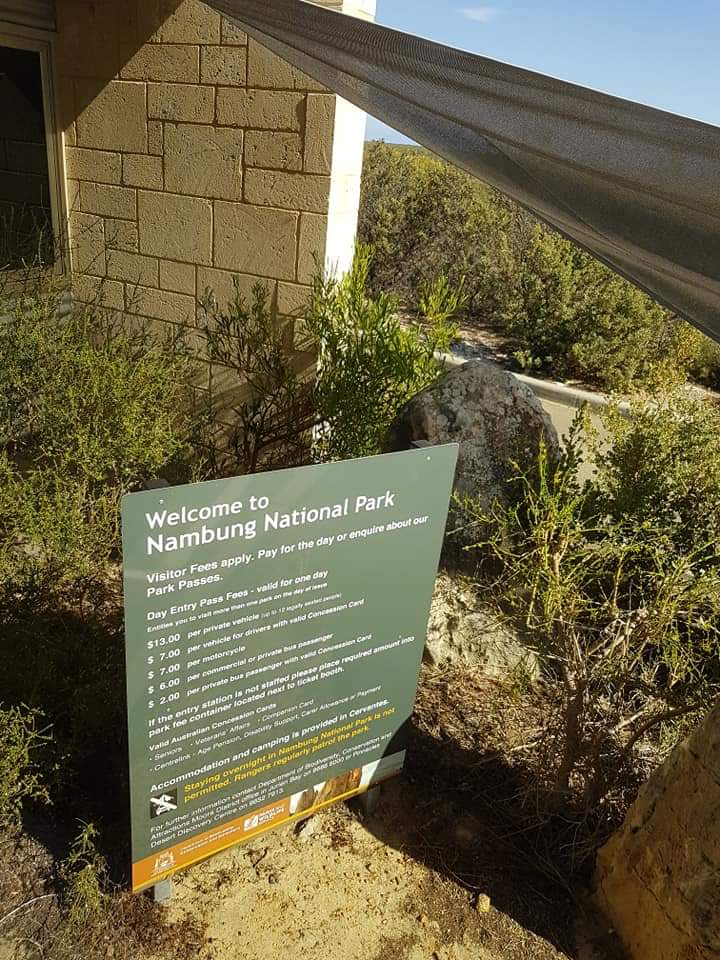
$13 entry per vehicle. Contact Pinnacles Discovery Centre (08) 96527 913 for more information when needed. Pinnacles Desert Discovery Centre is open daily 9.30am – 4.30pm and well worth a visit and yes, you will discover what is in many of the national parks in our area.
Lobster Shack
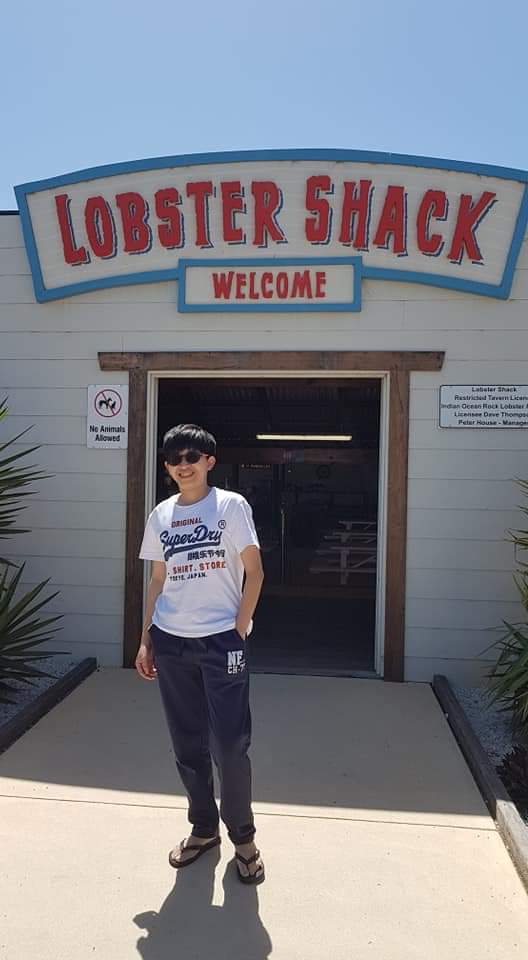
Days tour is kinda tiring but it is worth and there have so much fun. Not sure where to have lunch while visiting down Lancelin? Do you love to eat Lobster? Lobster shack had a very good taste Lobster and it is popular Lobster in Western Australia which will be good experience for travellers.
When it comes to experiencing a different way of life, Lobster Shack is here to show it to you in all its natural wonder. All our lives, we have been focused on providing the complete lobster and fishing experience with our tranquil fishing trips, our stunning meals and our sightseeing tours. Located on the lovely beach front of Cervantes, a mere two hours drive up the north coast from Perth and just 17km from the famous Pinnacles National Park, our family owned service will provide you with something that will stay in the memory and last a lifetime.
Such is our commitment to their fishing tours in Perth and their lobster-infused food creations, they were awarded the Bronze medal in the Tourist Attraction and Food Excellence in Food Tourism Award in 2013. Their continual passion and dedication to our services is why you can experience the complete lobster experience – from both their deep sea fishing charters and their cooking pots!
Delicious Meals Right From the Ocean.

From 11am to 3pm, every day of the week, lobster shack is open. Right from the boat of our fishing trips, they provide you with a host of delicious and tasty lobster meals. Made on the spot, they will give your tastebuds a fresh flavour, right from the heart of the sea. It is an outwardly and wholesome encounter.
Ultimately, I do recommended that after Lancelin trip, you can head down to Lobster Shack for lunch then go for the tour. After touring around the Lobster Shack, you then only should head to Pinnacles National Parks to explore. You may wondering how far is Lancelin sand boarding to the Lobster Shack. Well, it is 82.5km which is just take for 51 minutes drive.
#Winter #Roadtrips


 TravelQueen4ever 旅遊的璐