Life is all about travel. Live with no excuses and travel with no regrets. Adventure can remind you to explore new horizons, and step out of your comfort zone
Do you love park? Are you interesting with garden? I am going to introduce you about the destination of the Kings Park. Kings park is based in Perth Australia where you can view the beautiful city of Perth and it is one of the best tourist attractions in Western Australia. It is the largest and most beautiful inner city parks. It is rich in Aboriginal and European history, contemporary culture and it offers innovative design, displays and services. Kings Park has an international reputation for scientific research, leading horticulture, conservation as well as the public education.
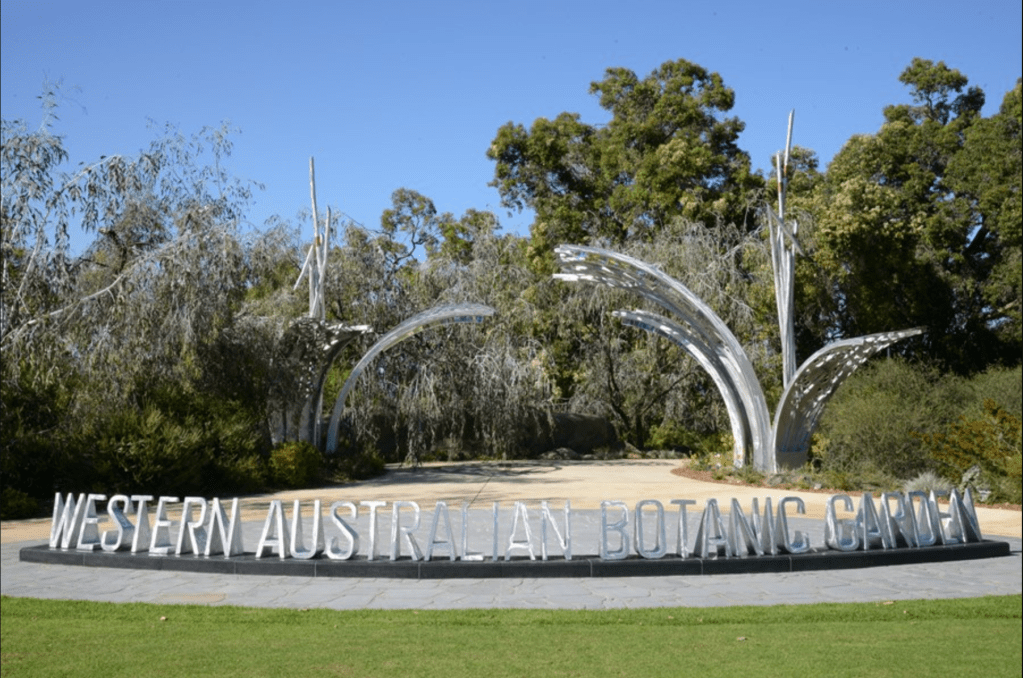
Kings Park is home to the spectacular Western Australian Botanic Garden, which displays over 3,000 species of the State’s unique flora. Two thirds of the 400 hectare park is protected as bushland and provides a haven for native biological diversity.
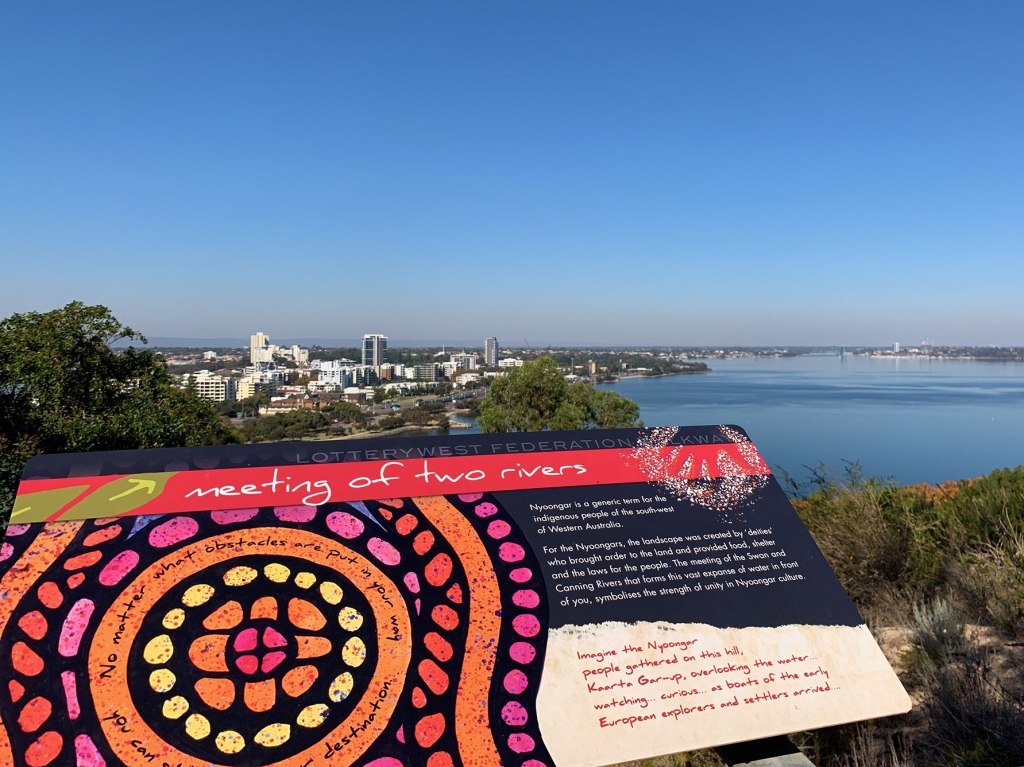
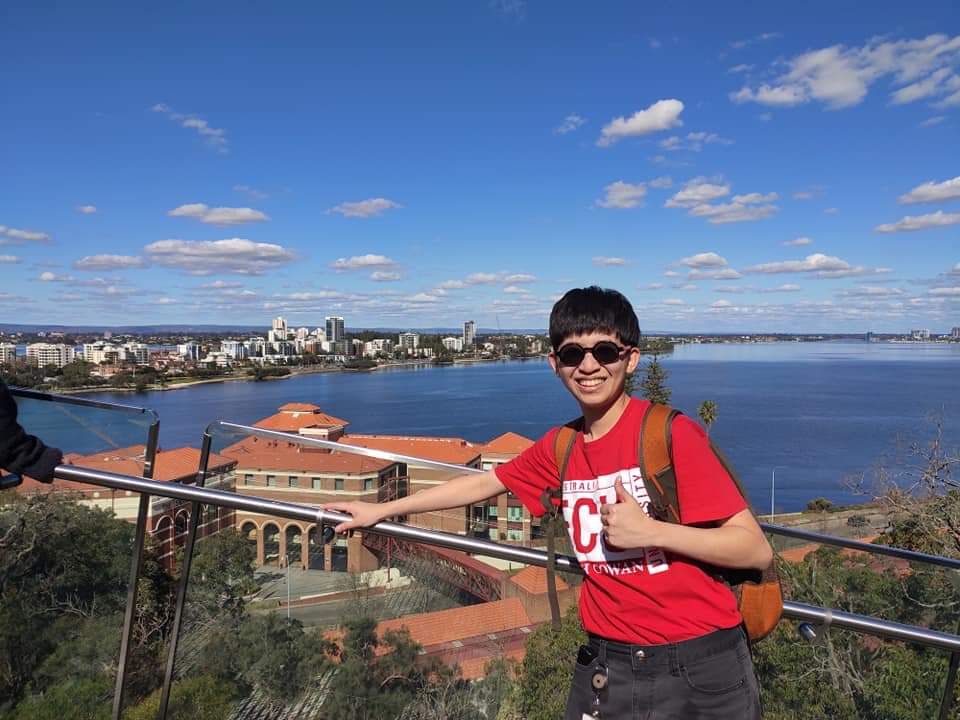
Meeting of two rivers which is name called Swan rivers and Canning rivers 🙂
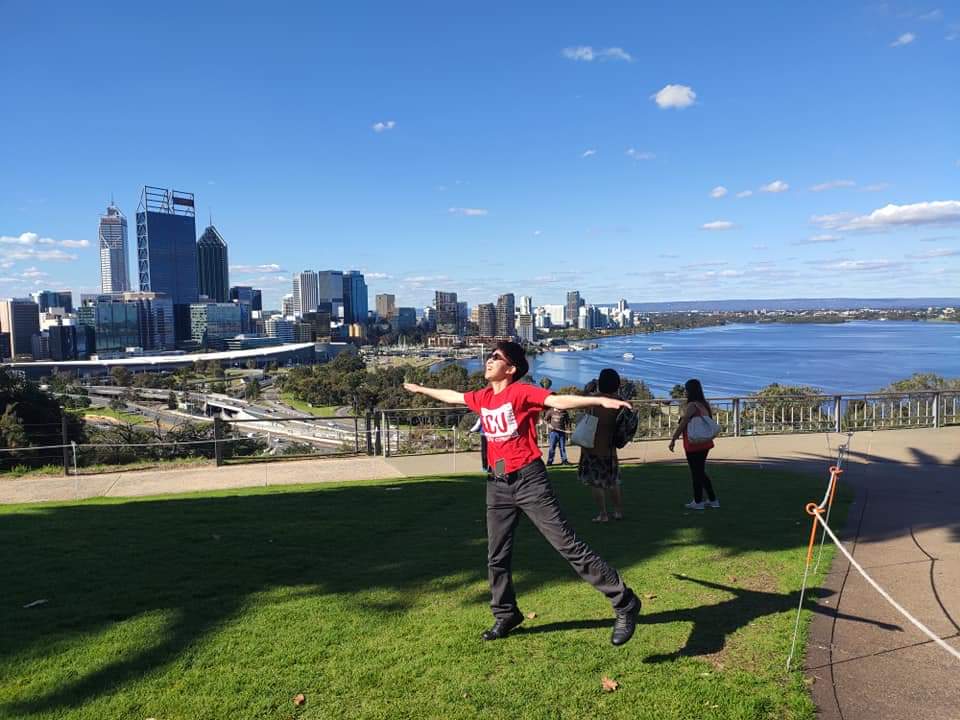
It is a place where you will enjoy sweeping views of the Swan and Canning Rivers which is shown the picture above, the city skyline and the Darling Ranges to the east. Bushland walk trails, immaculate gardens and parklands and a variety of children’s discovery play areas can all be found in Kings Park. The Visitor Information Centre, free daily guided walks, Aspects of Kings Park gallery shop, cafes and public transport are easily accessible.
Botanic Garden
Western Australian Botanic Garden
Kings Park and Botanic Garden celebrates the unique and diverse plant life of Western Australia and it is part of the worldwide network of botanic gardens committed to plant conservation. The original vision for Perth Park, later Kings Park, was of a European style garden with lawns, shady trees and flower beds. Recognition of the climatic differences and the low nutrient soil changed this vision.
In October 1965, the 17 hectare Western Australian Botanic Garden was opened; an everchanging, living research centre that focuses on the conservation of Western Australia’s flora and displays some of the State’s most diverse and spectacular plant groups.
When you visit the kings park, there is a very beautiful Botanic Garden in the kings Park. If you are interested in learning the local aboriginal plants then you should walking around the botanic garden.
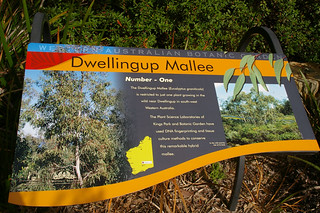
While walking around the botanic garden, you will see quite lot of this garden sign to tell you more details about the name of the garden such as the picture shown on the left side which is name garden called Dwellingup mallee. You will see the tallest tree which is called Boab tree as well. It is very interesting.
When I visited the botanic garden in the park, I find the boab tree is very interesting. One of the tour guide from the park, share us about the Boab tree. The story of the Giant Boab is called ‘Gija Jumulu’ captured world-wide media coverage during July 2008 as it journeyed over 3,200 kilometres, from Warmun in WA’s Kimberley region, to Kings Park in Perth.
Never before had a mature tree of this nature been transported across such a distance on the land. The iconic tree is estimated to be 750 years old, weighs 36 tonnes and stretches 14 metres high and eight metres wide (branch span). It is trunk measures 2.5 metres in diameter.
Glass bridge 😀
Take a walk in the treetops on the Glass Bridge which they name called Lotterywest Federation Walkway and enjoy unsurpassed views of the Swan River and Perth City.
Beautiful view from the glass bridge in the park
An impressive feat of engineering and architecture, the Glass Bridge is strong sculptural quality bonds with its landscape, with the rusted steel and powerful forms of the colossal pylons having an affinity with the large tree trunks surrounding them.
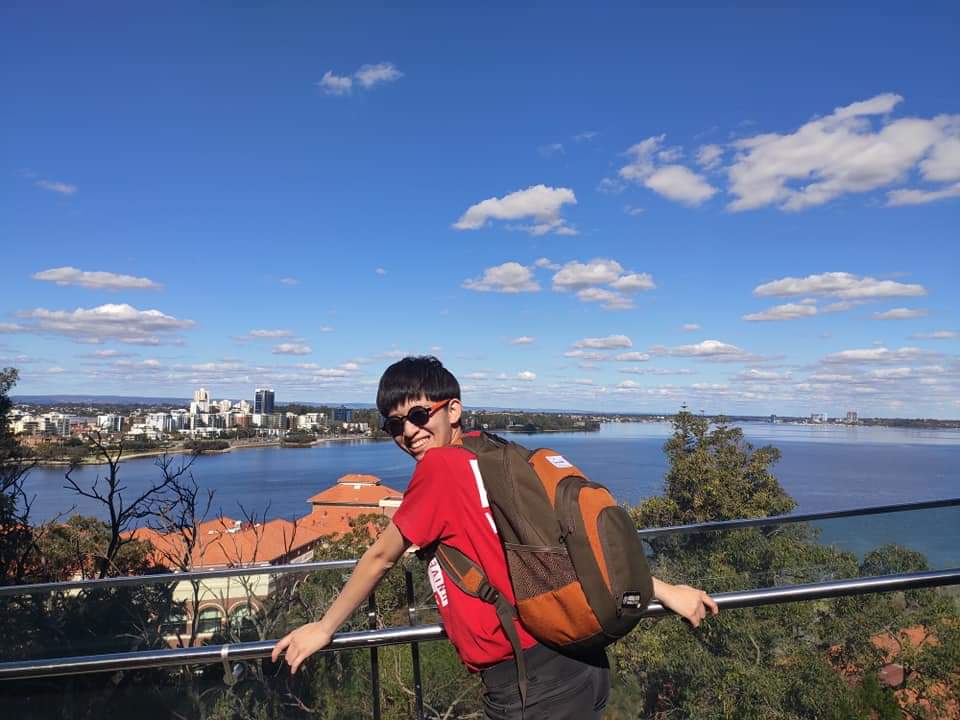
My perfect background 😂
As the land beneath the walkway starts to drop away into a valley and my journey leads me higher, I get a new perspective which enriches my appreciation of nature’s beauty.
From a bird’s eye view, I find myself marvelling a new at zamia cycads and balgas or grass trees, it is because I suddenly see the perfect pattern of their radial symmetry. Up in the forest canopy, I was at the one with the blossoms of marri, karri, tingle and jarrah, the intricate little cones of sheoak and dozens of native birds.
Just north of the Two Rivers Lookout near the Forrest roundabout, the Glass Bridge begins at ground level but I am soon swept aloft as I approach the apex – a spectacular arched bridge with a maximum height of 16 metres and glass walls which allow uninterrupted views to the forest floor. At the highest point, do take a moment to absorb the panorama of the Swan and Canning Rivers.
I still remember that i did jumping on the bridge and my friend was screaming because the bridge is very shaky as i was jumping. It is very good experience with walking on the bridge. The bridge is a walkway to get to the DNA towers.
The whole walkway is about 620 metres long, with the aerial section being 222 metres including the 52 metre bridge. It is accessible by wheelchair, although people with manual mobility devices may need assistance on the arch.
Artworks within the walkway include designs by the Nyoongar, the local Indigenous people. After spanning Mount Eliza Scarp the walkway descends to an amphitheatre where traditional performances are held during the Kings Park Festival. This performance area is named called Beedawong – the Nyoongar word for a celebration or meeting place.
Walking to the DNA Tower will pass by here
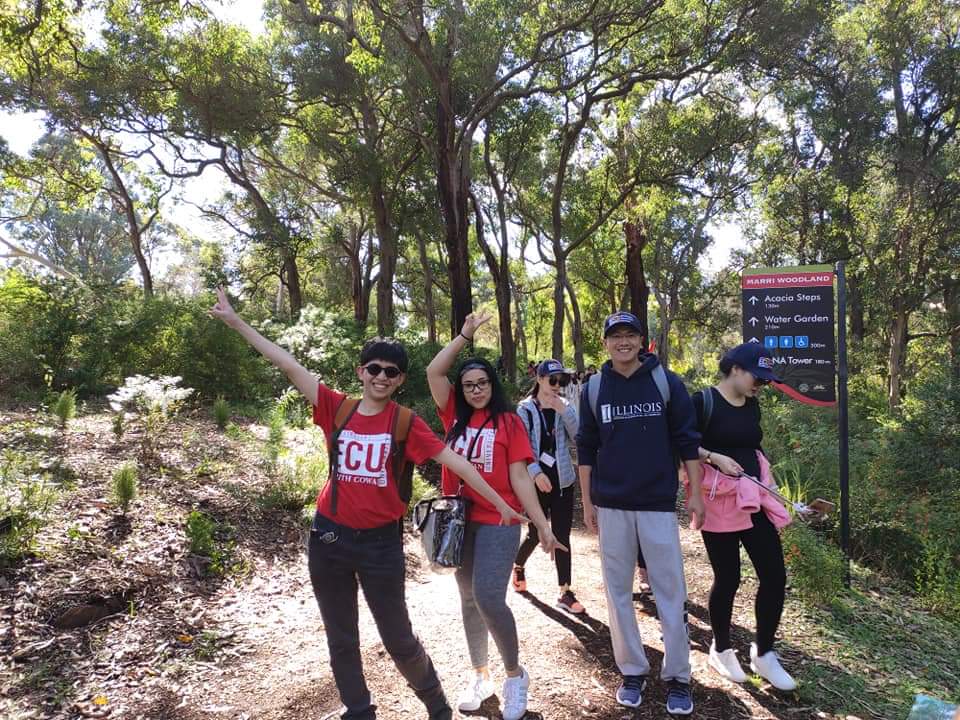
While walking pass through the glass bridge, you will walk pass this lane. It is a very beautiful plant surround there and you will see the water garden when you walk upto the DNA Towers.
DNA TOWERS
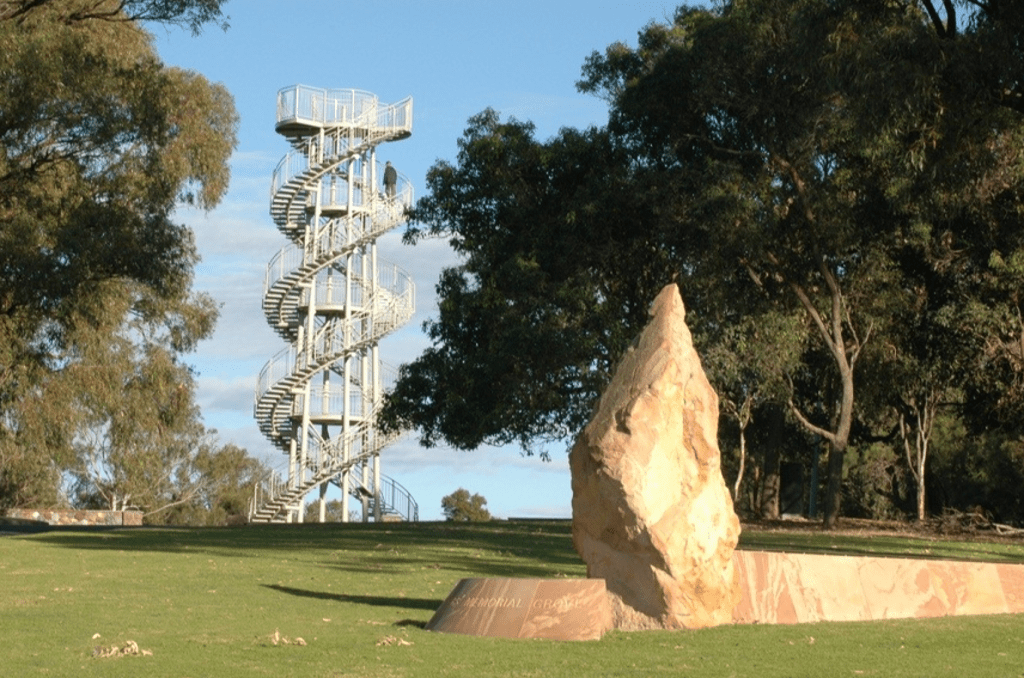
The beautiful of the DNA Towers
The DNA Tower is reffered from the deoxyribonucleic acid (DNA) double-helix molecule, which is found in all cells and control the development of life.
It is the highest viewing point in Kings Park with spectacular views throughout the climb. On a clear day you may even be able to see the Indian Ocean. DNA Towers is for you to have a view this beautiful City of Perth from the top. You could see the both rivers which is Swan and Canning rivers from the top. It is quite tiring to walk up but it is worth to do it because it is very beautiful view from the top of this towers.
The paving and wall surrounding the DNA Tower was constructed using stones from 11 towns and 80 shires within the Western Australia. The original design included a shallow reflecting pond at the base of the tower. It was replaced with Karratha stone paving in 2001 to enhance visitor safety.
The DNA Tower is located at the Forrest Drive end of the Broadwalk Vista. It is an easy 1.5 km walk from May Drive Parkland and the Western Australian Botanic Garden.
How beautiful is this viewing from the Kings Park
Apart from these things to do, what else is there to explore and discover in Kings Park? Most of the tourist visiting kings park for the DNA Towers, viewing the beautiful of the city, glass bridge, the botanic garden, Art Gallery as well as learning the local aboriginal cultures. Local people usually going to the Kings Park for BBQ with their family and friends, especially on the weekend. Kings park is also able to host for the couple to have a wedding activities such as wedding dinner. It is a very good background for the couples to have some nice photoshoot in the Kings Park.
Ultimately, Kings Park is very good for the education as well. Some school and the university always taking their student for a field trip to Kings Park to discover before giving them some activities to do which is pretty fun.
I do highly recommeded to go for a view if you are travelling to the Kings Park. It is one of the top destination in Perth Australia.
Stay tune on my next blog 🙂
If you have any concern and question, please don’t feel hesitate to contact me. I will help by giving you some travel advice. Make sure you are not traveling now due to the COVID-19 but for you to visit after this virus ended.
Lancelin is one of the top tourist attractions in Perth Australia which is worth to go for a visit. Lancelin is a small fishing and tourist town 127 km north of Perth, Western Australia. It is within the Shire of Gingin at the end of Wanneroo Road, and a few kilometres from the start of the Indian Ocean Drive. The best to go in Lancelin would be visit the Sand boarding, Lobster Shack as well as the Pinnacle.
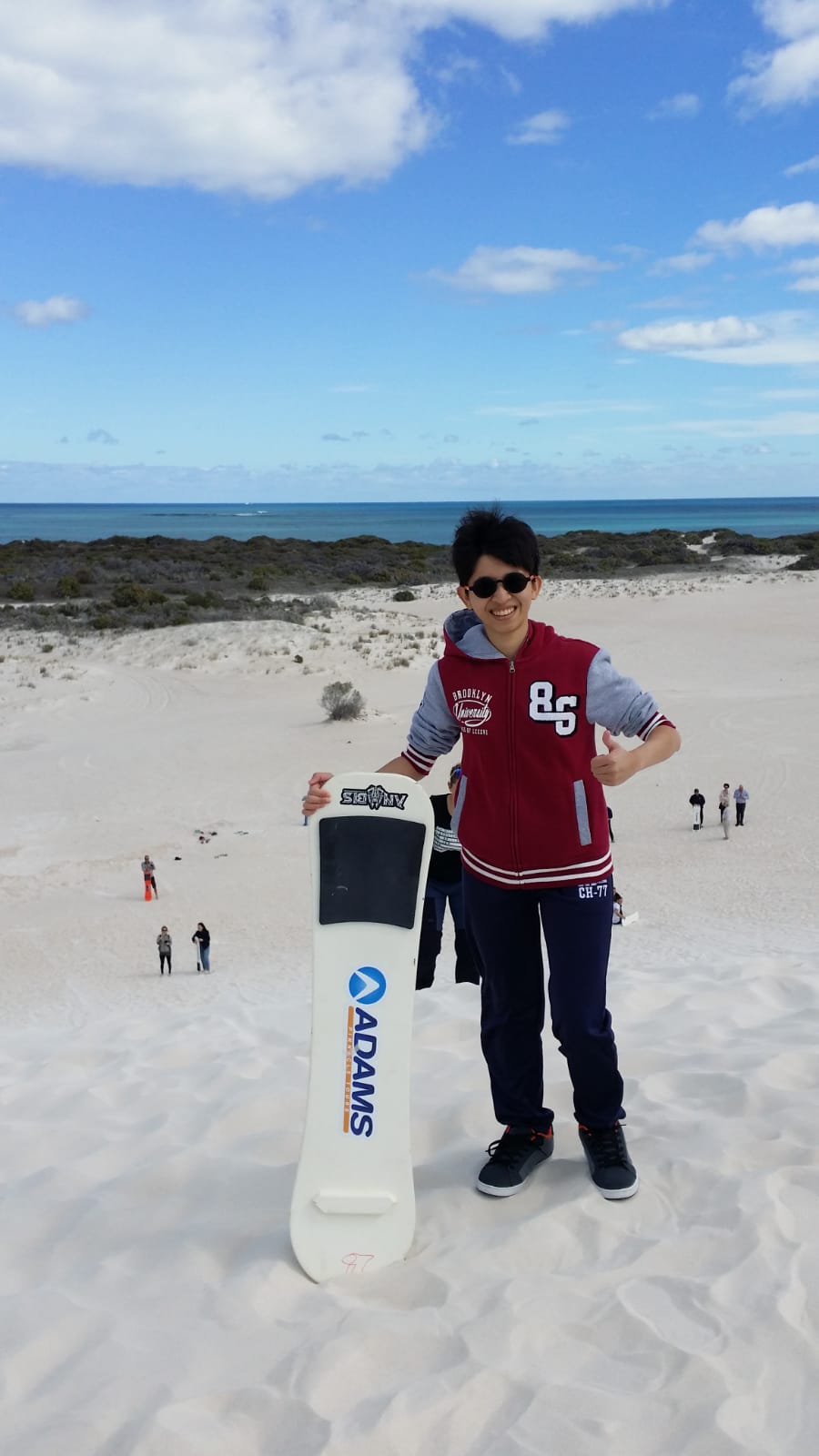
Lancelin has become one of Australia’s premier sandboarding destinations. Featuring pure white sand dunes, over three stories high, with free entry, the Lancelin sand dunes are must on your Western Australian adventure. To hire for the Sandboard, it is cost $12.50 per person.
Sand Boarding
How do you get to Lancelin sand dunes?
The Lancelin Dunes are only 1.5 hours north of Perth and are an easy day trip. Renting a car and self-driving is definitely an option; park at the entrance to the dunes and walk or take your 4 wheel drive all the way to the main sandboarding hill. However, there is an another option which is book for a day tours just for approximately $169.
Some people asked me that is Sand Boarding dangerous? Well, if you’re going to go for sand boarding in Perth, you need to ensure that you have travel insurance. While we made it home safely from the road sand dunes Perth. It can be very dangerous, with accidents happening quite often. But Perth Australia should be fine, however, travel insurance still be a must to have just incase there is anything happen.
When would be the best season to go for sand boarding
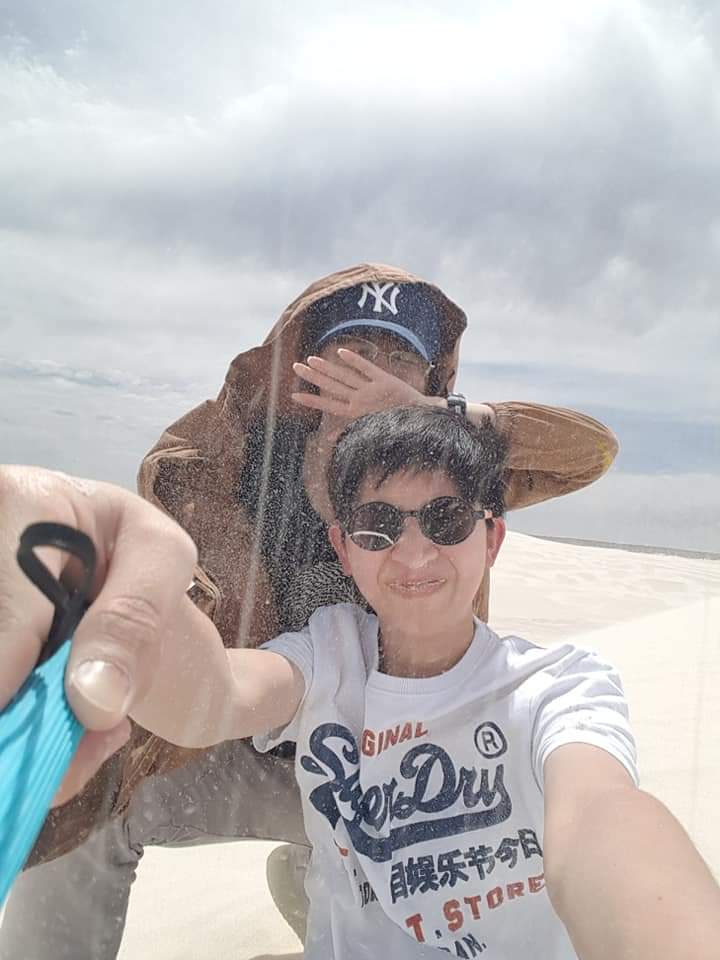
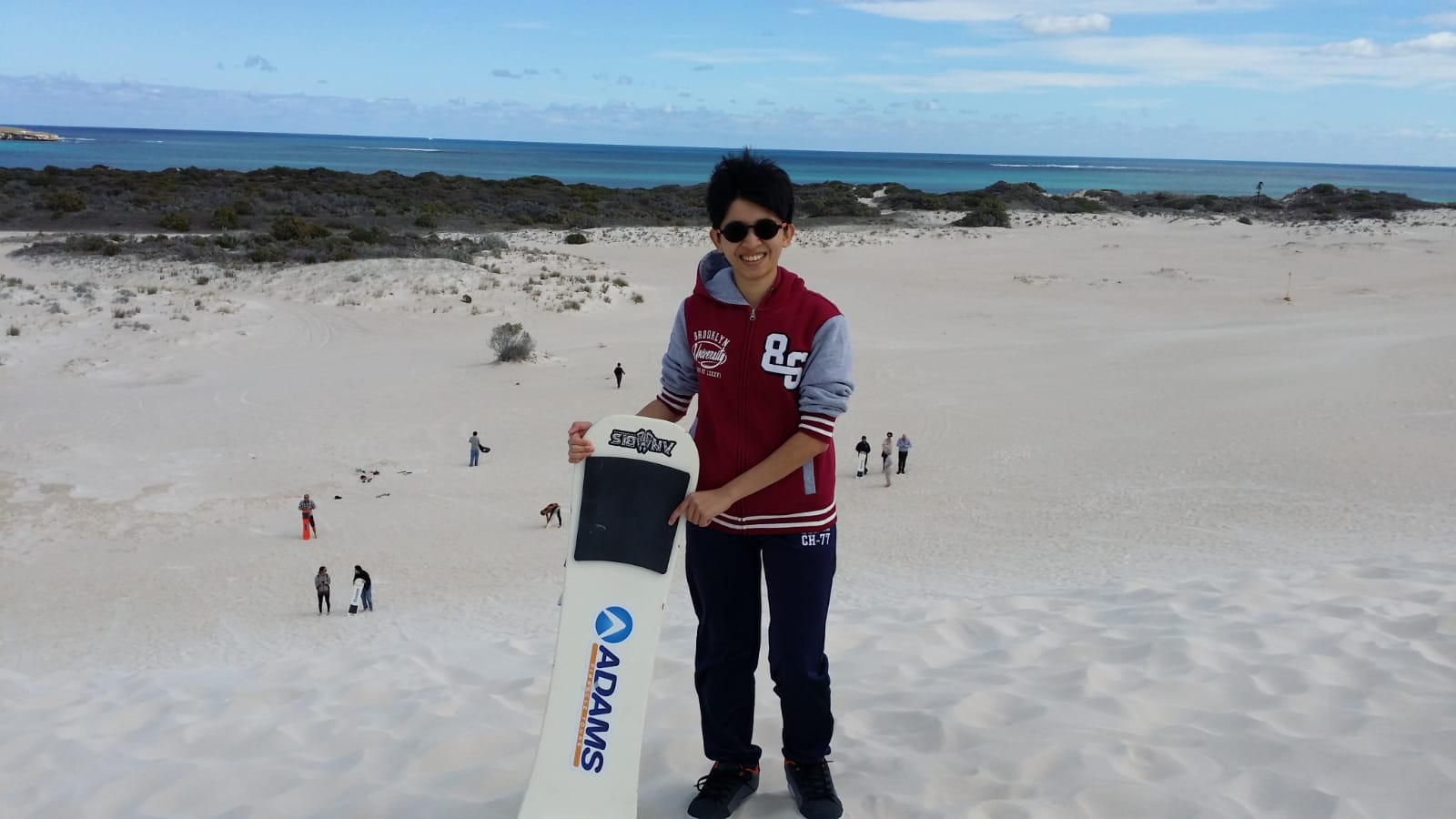
This is what will happening if you visit the wrong season
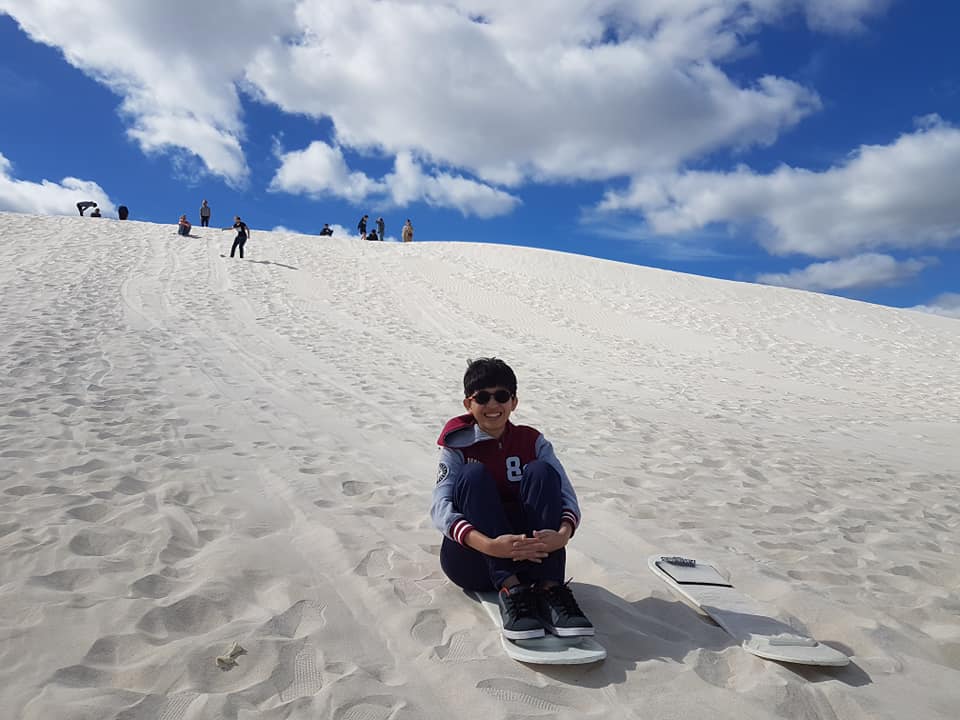
I was teaching my group students how to use it
In my personal experience, the best season to go for Sand Boarding would be Autumn and Winter which is between March and August. My first photos shown above is what will happened if you go during Spring and Summer season. The sand will flew into your mouth and eyes which is not comfortable at all so I don’t recommended to visit during the spring and summer season.
Nambung National Park (Pinnacles)
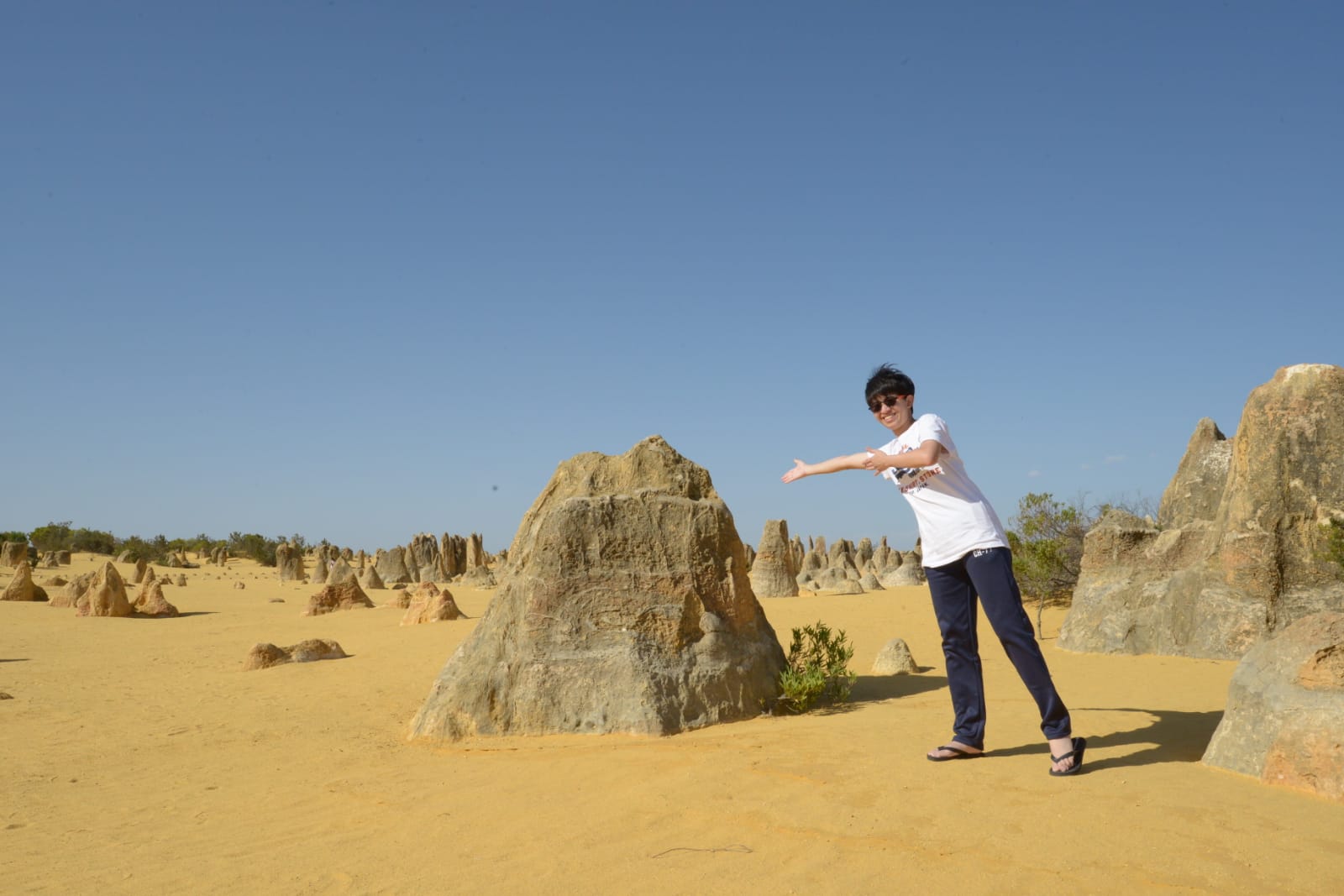
Nambung National Park is a national park in the Wheatbelt region of Western Australia, 200 km northwest of Perth, Australia and 17 km south of the small coastal town of Cervantes. The park contains the Pinnacles Desert which is an area with thousands of limestone formations called pinnacles.
Walk on the moonscape of the Pinnacles, feast on fresh lobster and surf giant sand dunes. Take a day trip from Perth to the other-worldly landscape of the Pinnacles Desert in Nambung National Park. Following the Indian Ocean Drive, stop to meet friendly kangaroos, try sand-boarding and taste Cervantes’ famous seafood delicacy.
If you’re travelling between July and October, you will see Western Australia in full colour, as the coastal landscapes are filled with the blooms of spring wildflowers.
Rising mysteriously from the dune sands are thousands of limestone pillars, up to four metres tall, a landscape in eerie contrast to the surrounding heath.
Some are jagged, sharp-edged columns, rising to a point; others resemble tombstones. What exactly are the pinnacles? What natural processes have created these odd and spectacular structures?
In places, the pinnacles reach up to 3.5m tall. Some are jagged, sharp-edged columns, rising to a point, while others resemble tombstones. Please treat the pinnacles with respect and never climb on these fragile structures.
Features that provide clues to the origin of the Pinnacles can be seen by the astute observer. For example, many pinnacles display cross-bedding structures, where the angle of deposition of the sand changes very abruptly. This indicates that the dunes from which the limestone bed was formed was originally laid down by the wind.
Some pinnacles have a mushroom-like shape, due to remnants of a calcrete capping. The mushroom shape has formed because the capping is harder than the limestone below it and therefore weathers at a slower rate.
So how did these strange pinnacles form? The coast of Western Australia, from Shark Bay nearly to Albany, has a near continuous belt of Tamala Limestone (probably more accurately called) aerolian calcarenite – ie. wind blown calcium carbonate – which has been produced by the combination of wind, rain and the cementing agent of calcium. A set of unique circumstances produced the pinnacles.
Firstly the huge sand dunes stabilised. The rains which fell on the dunes leached down through the sand carrying the calcium. This resulted in the lower levels of the dune solidifying into a soft limestone. As this stabilisation occurred a layer of soil formed on top of the dune which allowed plants to grow and further cemented the limestone below. Gradually the lowest layer of soil, which lay between the surface and the limestone, formed into a hard cap which resulted in the old dunes having three levels – a soil and plant level near the surface, a hard cap below the surface, and a thick layer of soft limestone at the bottom of the dune. Inevitably the roots from the plants on the top level found cracks and broke up the hard cap and the layer of soft limestone. The result was that under a surface covered with plants and soil the pinnacles developed. No one knows for sure how long ago this process occurred. It may have started as long ago as 500 000 years but equally it may only be a few thousand years old and it may still be continuing today. The Western Australian Museum has opted for some time in the last 80 000 years. Anyway the advent of drier weather in the region resulted in the top layer of plants and soil being removed and gradually the pinnacles were exposed so that today they stand like strange sentinels on a plain of wind blown sand.
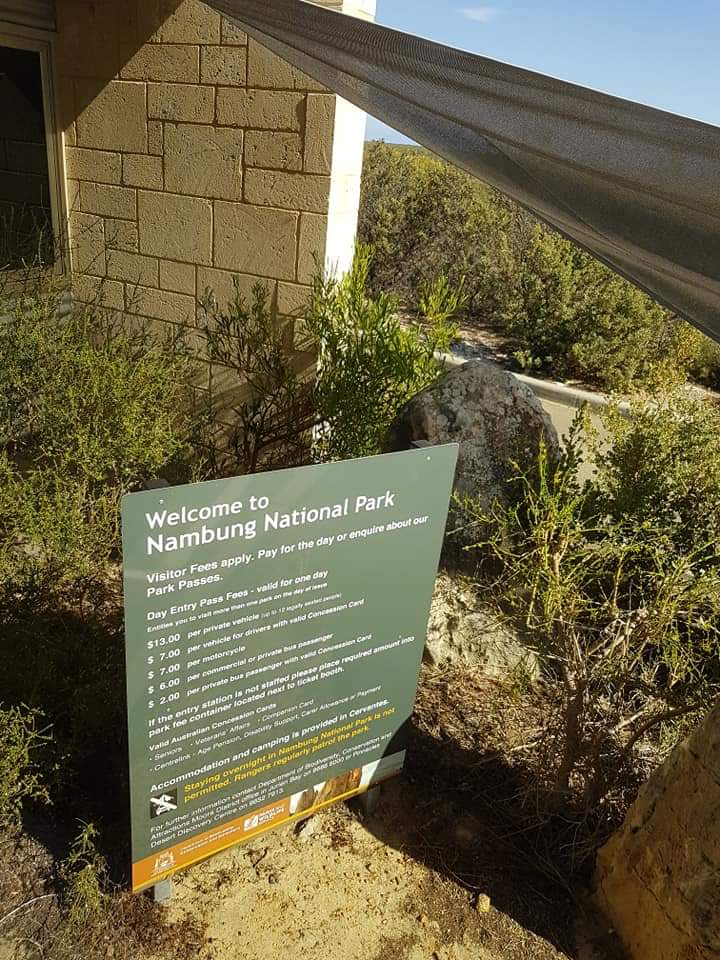
How much for the entrance ticket?
$13 entry per vehicle. Contact Pinnacles Discovery Centre (08) 96527 913 for more information when needed. Pinnacles Desert Discovery Centre is open daily 9.30am – 4.30pm and well worth a visit and yes, you will discover what is in many of the national parks in our area.
Lobster Shack
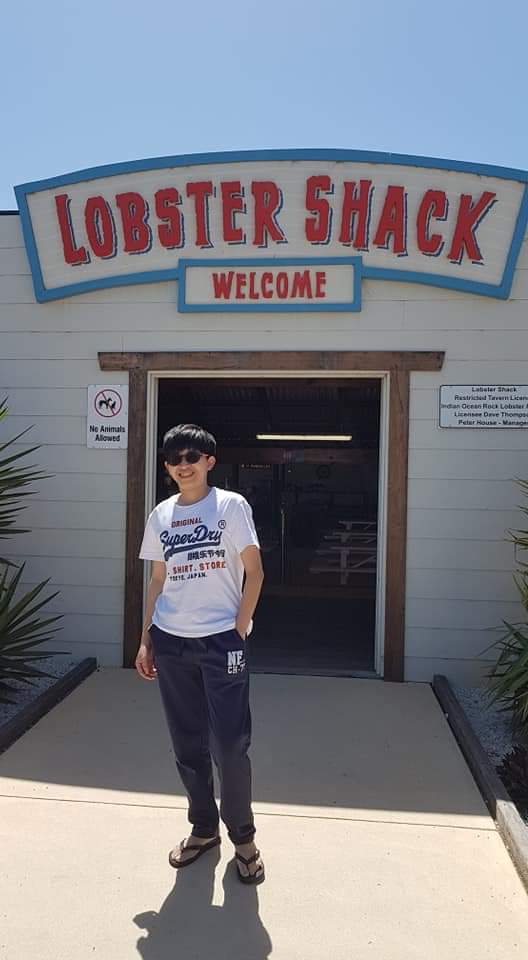
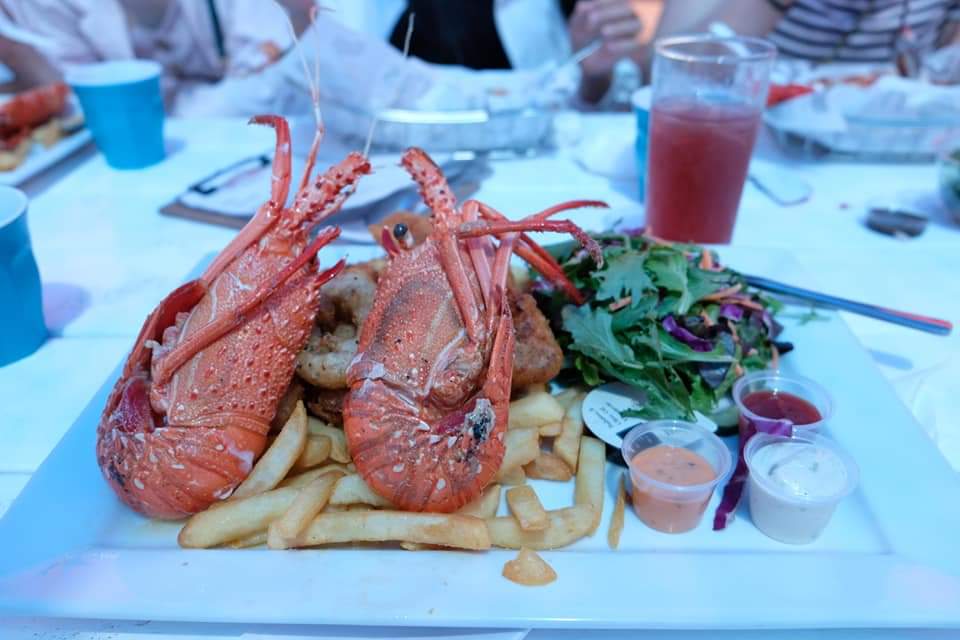
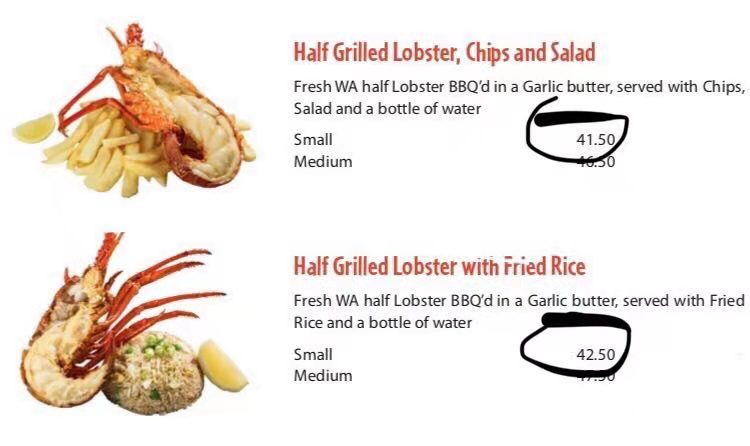
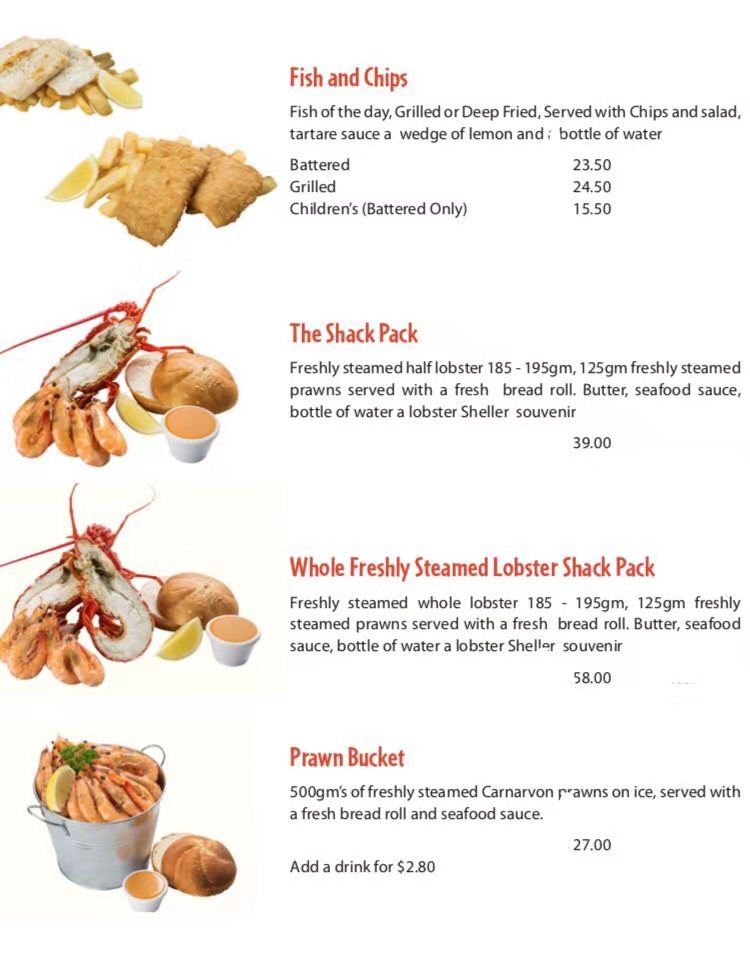
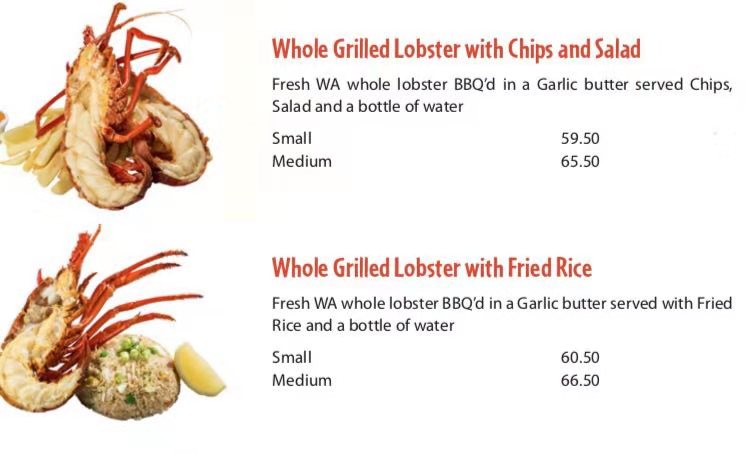
Days tour is kinda tiring but it is worth and there have so much fun. Not sure where to have lunch while visiting down Lancelin? Do you love to eat Lobster? Lobster shack had a very good taste Lobster and it is popular Lobster in Western Australia which will be good experience for travellers.
When it comes to experiencing a different way of life, Lobster Shack is here to show it to you in all its natural wonder. All our lives, we have been focused on providing the complete lobster and fishing experience with our tranquil fishing trips, our stunning meals and our sightseeing tours. Located on the lovely beach front of Cervantes, a mere two hours drive up the north coast from Perth and just 17km from the famous Pinnacles National Park, our family owned service will provide you with something that will stay in the memory and last a lifetime.
Such is our commitment to their fishing tours in Perth and their lobster-infused food creations, they were awarded the Bronze medal in the Tourist Attraction and Food Excellence in Food Tourism Award in 2013. Their continual passion and dedication to our services is why you can experience the complete lobster experience – from both their deep sea fishing charters and their cooking pots!
Delicious Meals Right From the Ocean.
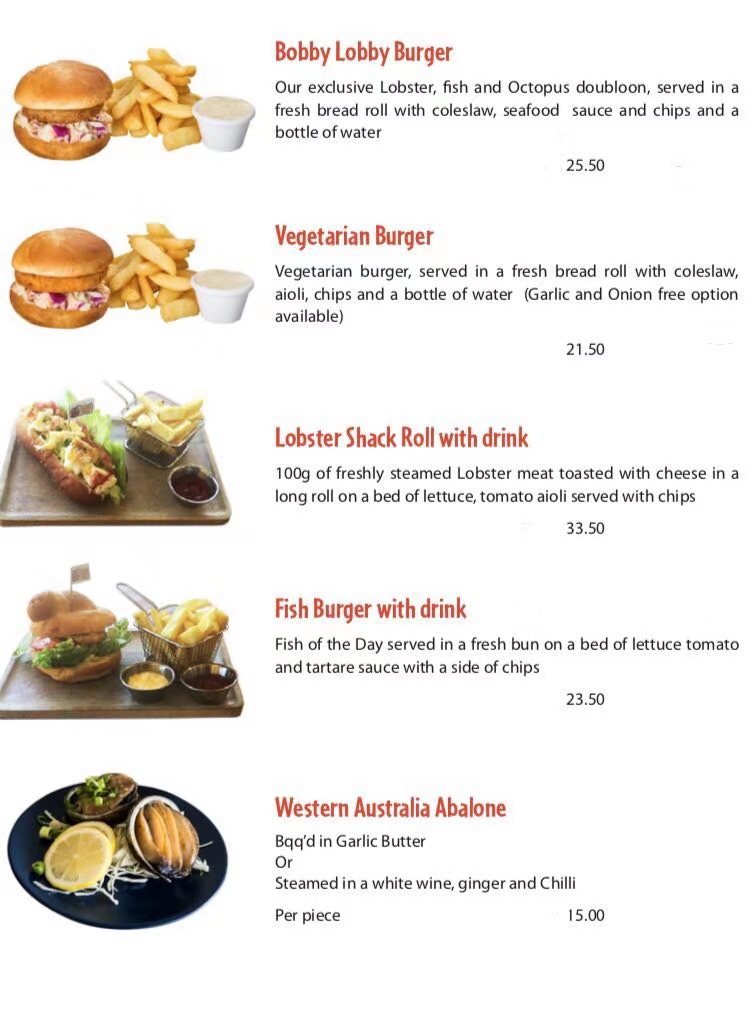
From 11am to 3pm, every day of the week, lobster shack is open. Right from the boat of our fishing trips, they provide you with a host of delicious and tasty lobster meals. Made on the spot, they will give your tastebuds a fresh flavour, right from the heart of the sea. It is an outwardly and wholesome encounter.
Ultimately, I do recommended that after Lancelin trip, you can head down to Lobster Shack for lunch then go for the tour. After touring around the Lobster Shack, you then only should head to Pinnacles National Parks to explore. You may wondering how far is Lancelin sand boarding to the Lobster Shack. Well, it is 82.5km which is just take for 51 minutes drive.
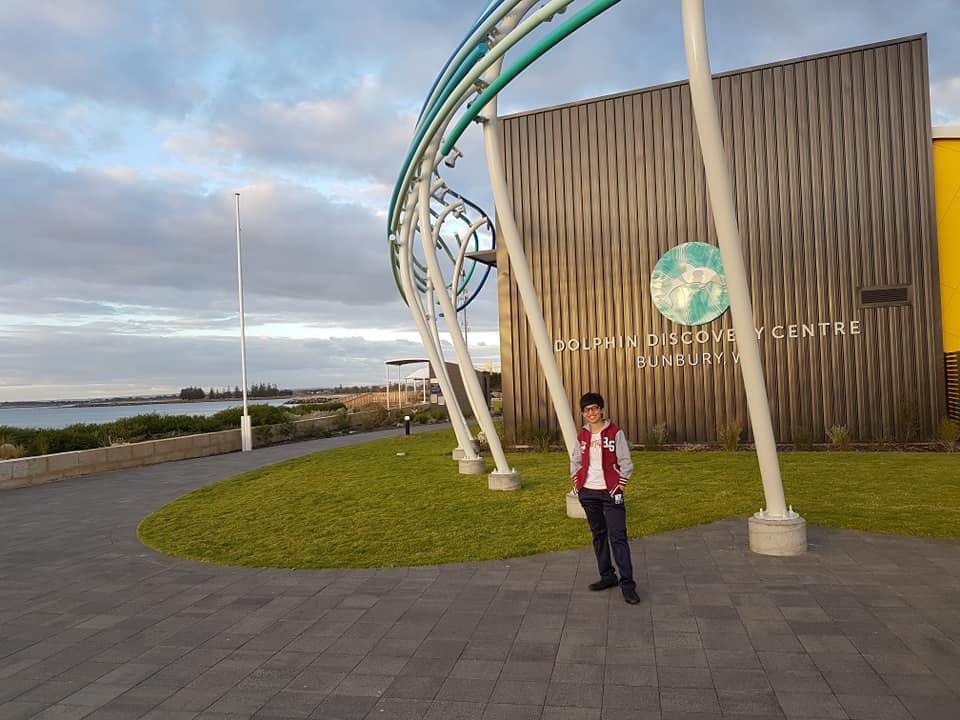
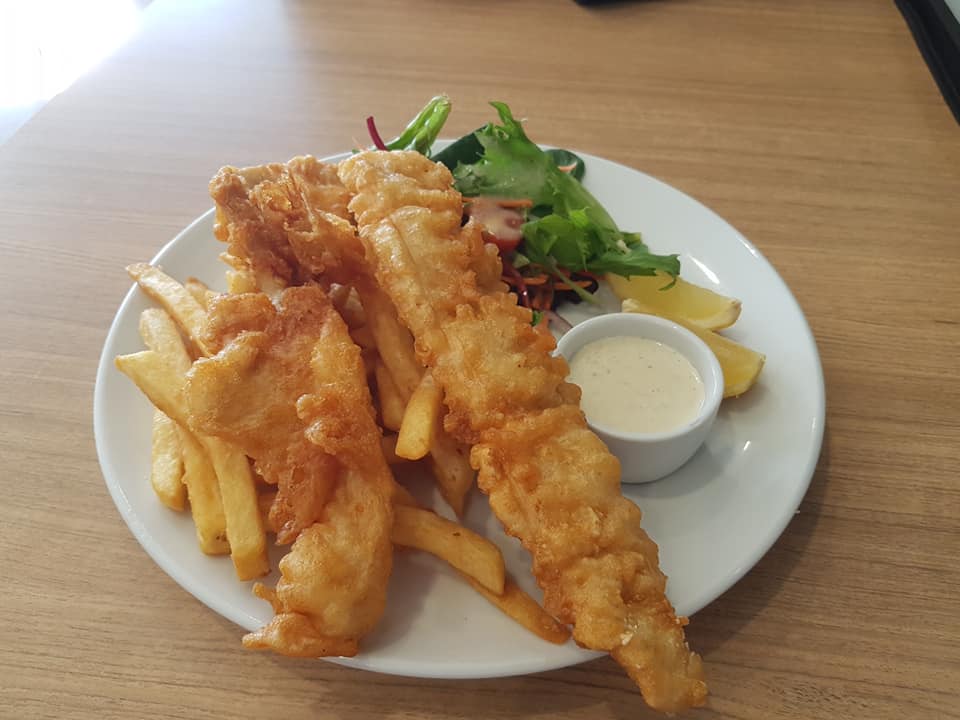
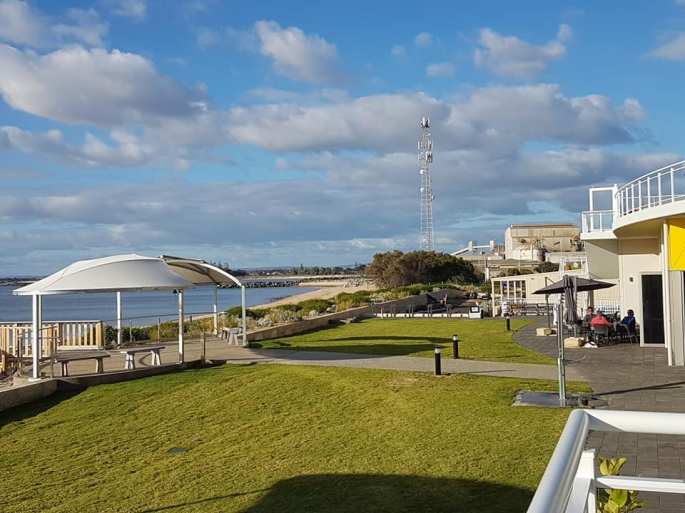
Dolphin discovery centre is located in Koombana Bay Bunbury WA and it is a top tourist attractions in Bunbury Western Australia. This attraction is for tourist to have premier wild dolphin experience. They have a good facilities such as cafe and restaurant. Their food are yummy and I do recommended for a taste. They do have 4 tours market. These tours are interaction zone, interpretive centre, Dolphin Eco Cruises and swim with the dolphins.
Interaction Zones
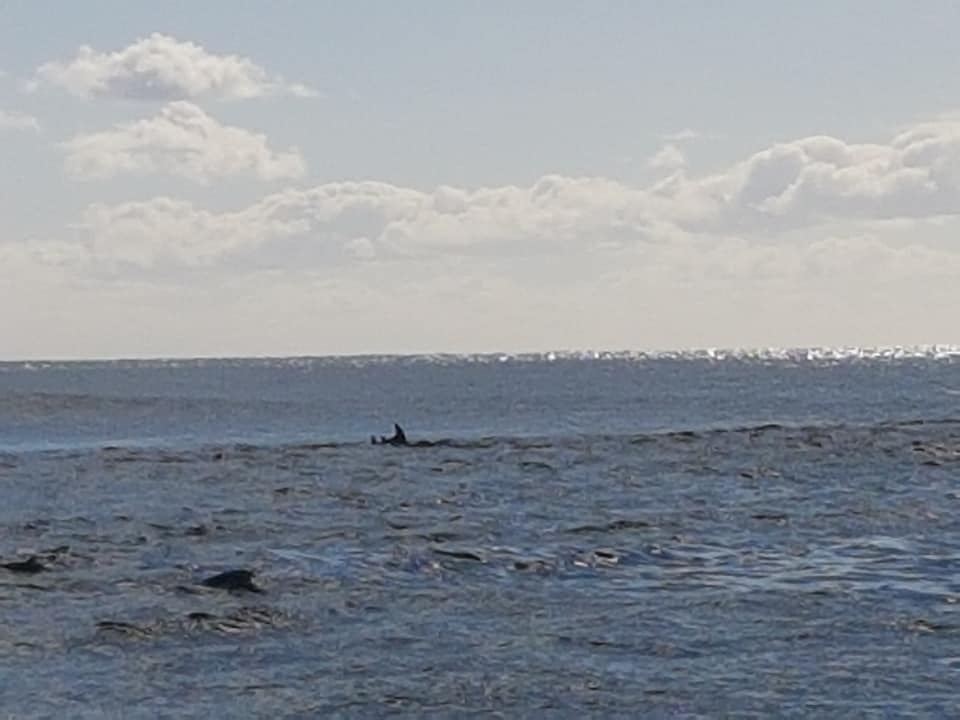
Firstly, interaction zone with so many dolphins living along the coast, Bunbury and Koombana Bay offer the perfect opportunity for dolphins and humans to meet and interact. The Interaction Zone has been designated as a special dolphin protection area for this very purpose. Under strict license conditions set out by the Department of Biodiversity, Conservation and Attractions (BDCA), the Centre has been able to offer a unique interactive experience on the beach right in front of the Centre since 1989. Dolphin Volunteers have been trained to ensure the interaction guidelines are followed and they will always be present on the beach to answer your questions and manage the interaction should dolphins visit the Zone. Naturally, being a wild animal there is no set time, however, the most common visit times are in the mornings of the warmer months between 8 am – 12 noon! Therefore, there is no ticket or booking requires!
Interpretive Centre
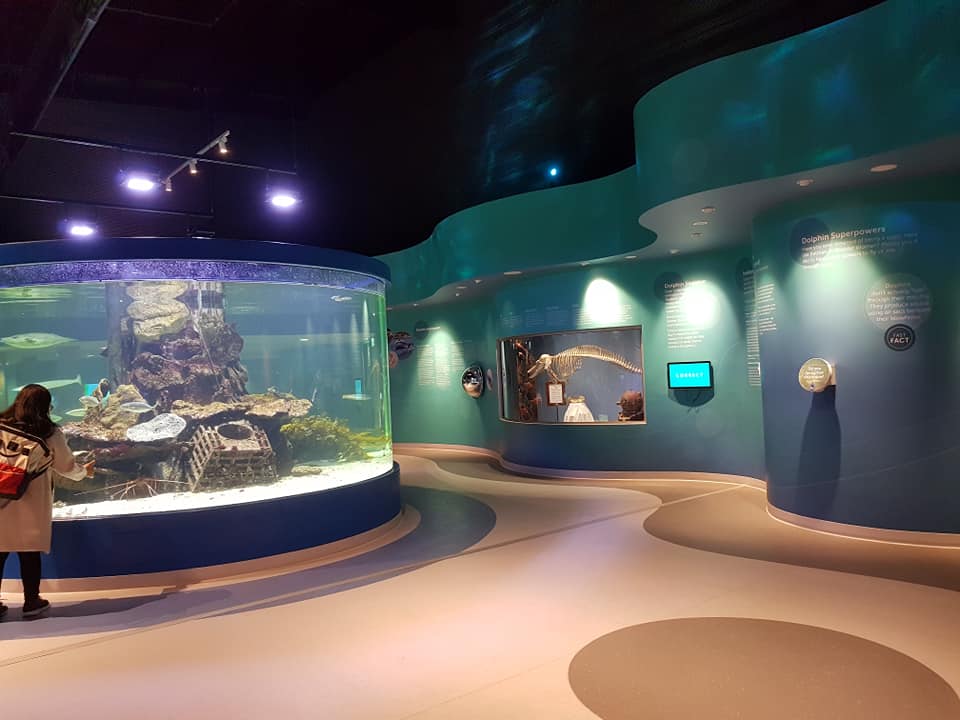
Secondly, interpretive centre is the aquarium where will give the tourists to experience the local marine environment. Also, there is a feeding program. All age groups are welcome to participate with interpretive centre. However, there is $18 per person for the admission fees. There is an option of package with the dolphin eco cruises. Please take note that 3 years old and below are free of charge.
Dolphin Eco Cruises
Dolphin Surfing
Thirdly, the Dolphin Discovery Centre’s Dolphin Eco Cruise is for 90 minutes within Koombana Bay. Centre’s vessel provides an excellent viewing platform designed to get you as close as possible to the dolphins – without getting your feet wet! The team will introduce you to their local Bottlenose Dolphins as they interact in their natural environment. Many of the Dolphins seen on the cruise call Koombana Bay their home. They can be seen frolicking, playing, sleeping and feeding during the cruise. The informative commentary from the skipper will keep you updated throughout. This tour is running daily for 12pm noon scheduled! The cost fees will be $54 per person. I do highly recommended for you as a tourist to go for a tour and experience Dolphin eco cruises. $54 fares included for you to learn more about the Dolphin genders, surfing, food they eat etc…..The best day to go will be between October and May. Please try to avoid cold or raining season due to the horrible weather.
Swim with the Dolphins
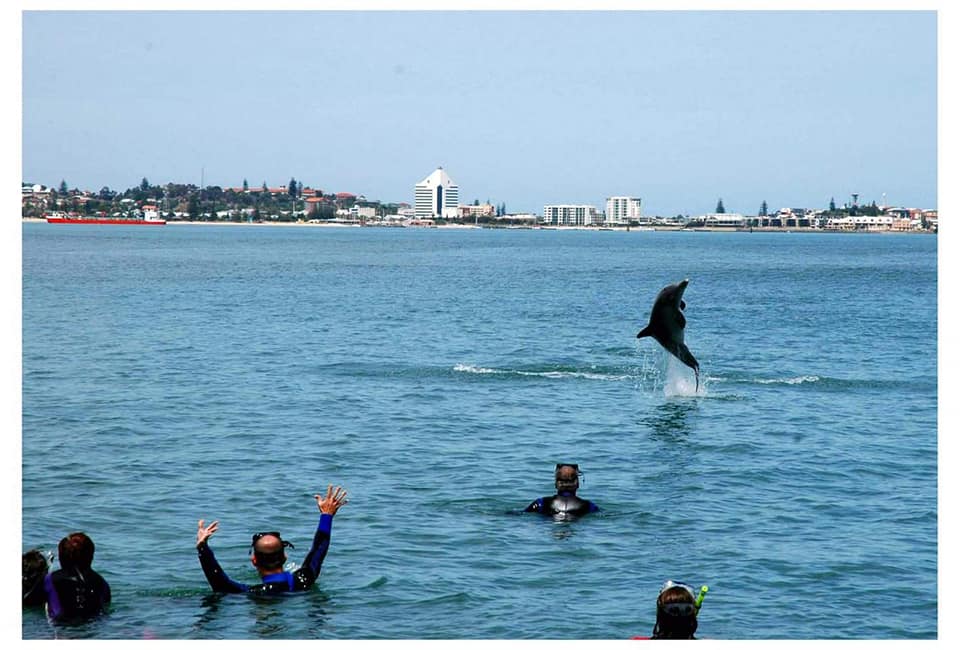
Lastly, I do highly recommended for swim with the dolphins for an intimate swim with wild dolphins in their natural environment. This tour is the most popular and exhilarating experience. Visitors are given the opportunity to swim with the wild Bottlenose Dolphins in their own environment. Accompanied by my experienced guide and trained volunteers you will venture into the open waters of Koombana Bay. Depending on dolphin sightings you will be guided into the water where the dolphins may elect to initiate interaction with the swimmers. As they are wild dolphins, interaction cannot be guaranteed. This tour is only available between November – April. Always running at 8am sharps. Regarding to the prices, swimmers will be cost $165 per person, Observers cost $85 per person.
History of Dolphin Discovery Centre
During the mid 1960s, local resident Mrs Evelyn Smith began feeding the dolphins from a small jetty near her home on the Leschenault Inlet (directly south of the Discovery Centre). However, it wasn’t until 1989 that a dolphin specialist was hired by the newly established Bunbury Dolphin Trust to continue this tradition and begin feeding and studying the local dolphins of Koombana Bay.
From this work came the establishment of the Interaction Zone in 1990 and the Dolphin Discovery Centre in 1994 to allow tourists and members of the community to interact, understand and enjoy the group of five to six dolphins that regularly visit this Zone. We don’t clearly understand why the dolphins continue to visit the Zone today, however, research suggests that the small amount of food they receive as a reward for their visit is not the only attraction. There are many dolphins that visit the Zone regularly that do not receive any fish and many of them stay for extended periods of time for interaction with the human visitors. Sick and injured dolphins also treat the beach as a haven, with some repeatedly visiting during periods of illness or injury. A weekly dolphin visitation chart is maintained on site as a guide for people who visit the Centre. The Dolphin Discovery Centre will continue to grow and increase its resources to further make its mark on the tourism industry and to continue to care and conserve the Koombana Bay dolphins.
How to get to the Dolphin Discovery Centre?
South West Coachlines
Well, this is depend on where are you coming down from. If you are coming down from Perth airport, you will need to book for the South West Coachlines buses from airport to the Bunbury Bus Station. It will takes for about 3 hours to get to Bunbury. If you are coming down from Perth City, there is two public transportation go to Bunbury. They are Australind train line and the South West Coachline buses. The pickup point for the buses will be at Elizabeth Quay Bus Station. It will takes for 4 hours to get there from Perth. After you arrive the Bunbury Bus Station, it will take you for a walk to Dolphin Discovery Centre for about 15 to 20 minutes walk. Buses is strongly recommended as the distance to the DDC is pretty closely. For the train line, it will takes for 2 hours to get to Bunbury which is very good and fast but there is a distance to the centre so you will need to take the bus to get to the centre from Bunbury train station if you catch train line down. Train line is much cheaper than buses. This will be up to your preference. Go for a visit and Enjoy yourself!!






 TravelQueen4ever 旅遊的璐